
June 11, 2026
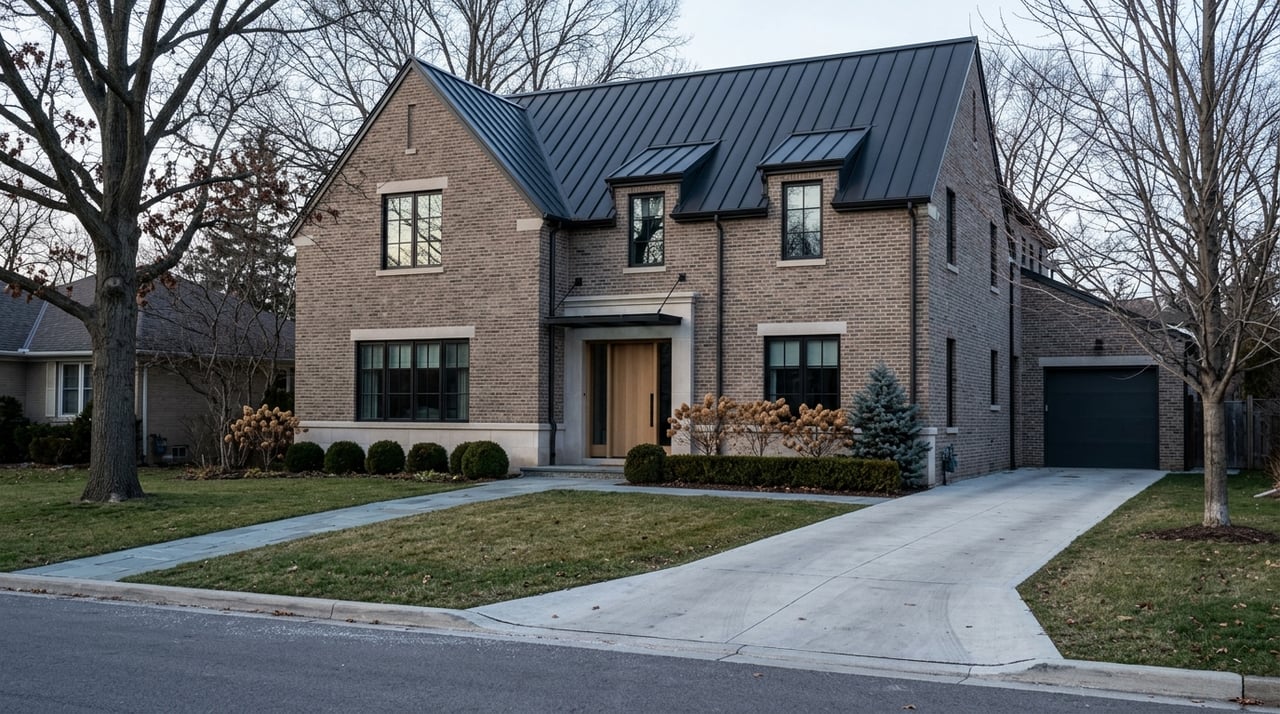
If you are considering new construction in Winnetka, you are not just looking at a house. You are stepping into a village with a long-established identity, tightly defined zoning, and a clear expectation that new homes should fit their surroundings. That can feel complex at first, but it also helps protect the look and rhythm that draw many buyers to Winnetka in the first place. In this guide, you will learn how new construction fits into a historic village, what rules shape the process, and what to ask before you buy, build, or tear down. Let’s dive in.
Winnetka is a compact North Shore village founded in 1869. It covers just 3.81 square miles, had a 2020 Census population of 12,744, and reports a 92.0% owner-occupied housing rate from 2020 to 2024. The median owner-occupied home value is $1,337,800.
Those numbers help explain why new construction is often judged as a neighborhood-fit issue, not only as a private property decision. In a village with high ownership, high home values, and a strong sense of place, buyers and sellers tend to pay close attention to how a new home sits on the lot, how large it feels on the block, and whether it reflects the character of nearby homes.
Winnetka’s current policy roadmap is the 2040 comprehensive plan, adopted in 2023. The village also says its design guidelines are the basis for reviewing alteration and new-construction proposals through the Design Review Board and the Certificate of Appropriateness process.
In practical terms, that means new construction is shaped by more than one rulebook. You have zoning standards that define the buildable envelope, design guidelines that focus on context and appearance, and preservation rules that may affect demolition or changes to older properties.
Winnetka has five single-family residential districts, from R-5 through R-1. Minimum interior lot areas range from 8,400 square feet in R-5 to 48,000 square feet in R-1, while minimum average lot widths range from 60 feet to 150 feet and minimum lot depths run from 120 feet to 300 feet.
Those district standards matter because two houses with similar square footage can have very different design options depending on the lot. Before you get attached to a building concept, you need to know the exact zoning district, lot width, and lot depth.
Front setbacks range from 30 feet in R-4 and R-5, 40 feet in R-3, and 50 feet in R-2 and R-1. Rear setbacks in R-2 through R-5 are 15% of lot depth, with a minimum of 10 feet and a maximum of 25 feet, while R-1 requires a 50-foot rear yard.
There is also an important contextual rule on many block faces outside R-1. A new house may need to align with the average front setback of nearby principal buildings, which helps keep homes from sitting too far forward or too far back compared with their neighbors.
In Winnetka, side yards are formula-based. That means the required side yards change with lot width, and the combined total of both side yards must also meet the code minimum tied to average lot width.
For buyers, this is one of the easiest details to overlook and one of the most important to confirm. A lot that looks wide enough on paper may still create a tighter buildable envelope than expected once side-yard formulas are applied.
All single-family districts are limited to 2½ stories. Maximum building heights range from 31 feet in R-4 and R-5 to 38 feet in R-1.
Winnetka also caps total impermeable surface area at 50% of lot area, and gross floor area cannot exceed 50% of lot area after allowed exclusions and bonuses are applied. This is one reason many new homes in Winnetka are designed carefully around volume, roof form, and usable living space rather than simply trying to maximize bulk.
Winnetka’s design guidelines define contextual design as design that responds to existing massing, height, setbacks, proportions, scale, roof forms, materials, articulation, lighting, signs, and awnings. The guidelines also state that massing should acknowledge adjacent structures.
That sounds technical, but the idea is simple. In Winnetka, a successful new house usually feels connected to its block. It does not have to copy the home next door, but it should respect the scale and rhythm of the street.
The village’s design guidelines identify English Tudor, Georgian, Art Deco, Dutch Colonial, and Contemporary as common architectural styles, with English Tudor described as the most prominent style in Winnetka. Tudor homes are typically 1½ to 2½ stories with steeply pitched roofs, cross gables, dormers, and mixed materials.
That does not mean every new home needs to be Tudor. It does mean that rooflines, materials, proportions, and facade articulation often matter as much as raw square footage when a design is evaluated in context.
The Winnetka Futures 2040 Plan says single-family regulations are meant to keep infill houses in character with neighboring homes. The plan points to tools such as varying height standards by district, limits on street-facing garages, and incentives for traditional elements like open front porches and detached garages.
For you as a buyer or seller, this reinforces an important point. In Winnetka, new construction that fits the village pattern is generally more aligned with local policy than a generic teardown-and-rebuild approach.
Winnetka strengthened preservation rules in 2021 in response to demolition pressure on historically or architecturally significant homes. If the Historic Preservation Commission finds a home significant, the village can impose a demolition delay of up to 270 days.
That can be a major factor if you are buying a property for redevelopment. A closing strategy, construction timeline, and carrying costs may all look different if historic review becomes part of the process.
Qualifying properties can receive a one-time 20% maximum building size bonus if they are preserved and not altered in a way that destroys their significance. The village also states that new buildings and additions should remain compatible with the size, scale, color, material, and character of the property or neighborhood.
This creates an important nuance in Winnetka. Sometimes the best path is not full replacement. In some cases, preserving a significant structure while planning thoughtful changes may create both design and regulatory advantages.
Not every lot in Winnetka works the same way. Beyond zoning and design review, some sites trigger additional rules that can affect cost, engineering, and timing.
If a property is in a floodplain or within 100 feet of the 100-year base flood elevation, Winnetka requires permits, topographic surveys, and compensatory storage for fill. New construction must elevate the lowest floor at least 2 feet above the base flood elevation.
That makes floodplain review one of the first questions to ask before you move forward with plans or make an offer on a teardown candidate.
Lots abutting Lake Michigan must comply with steep-slope and lakefront regulations. For those lots, the required front setback is the toe of the bluff or 50 feet from the ordinary high water mark, whichever is farther.
Lakefront properties can be compelling, but they come with a different level of site analysis. Buyers should expect added review of topography and setback constraints.
Winnetka’s engineering guidelines say new home construction on a previously developed lot must provide detention for added runoff created by new impervious area. More extensive redevelopment can trigger detention for the full required volume.
This matters because lot coverage is not just about what fits visually. It is also about how the site handles water, which can influence design, hardscape choices, and construction budget.
When you are looking at a lot, a teardown, or a home with expansion potential, the right early questions can save you time and uncertainty. In Winnetka, these questions map directly to the village’s framework.
These are not minor details. They are often the difference between a straightforward project and a much longer approval path.
The village says new home construction or additions typically take about 3 weeks for initial plan review. It also notes that a survey used for a permit cannot be more than 5 years old.
That does not mean every project is approved in three weeks. It means your first review cycle has a general timeline, and your readiness matters. A current survey, accurate zoning analysis, and a plan that respects the lot and the block can help you move through the process more efficiently.
If you are buying new construction or land in Winnetka, you should think beyond finishes and floor plans. The bigger question is whether the house works with the village’s zoning, design standards, and preservation framework.
If you are selling a property that could attract builders or end users, these same rules shape value and buyer interest. A lot’s zoning district, dimensions, historic status, and site conditions can all affect how the opportunity is priced and marketed.
In a market like Winnetka, context is not a side issue. It is part of the asset itself.
Because Winnetka’s framework is layered, local knowledge can make the process far clearer. Understanding zoning, lot geometry, preservation review, and site-specific issues early helps you make more confident decisions and avoid assumptions that do not hold up once plans are reviewed.
That is especially true in a village where the goal is often contextual replacement, not simply building the biggest house the lot might allow. The strongest outcomes usually come from matching your goals to the realities of the property from the start.
If you are evaluating a teardown, comparing new construction options, or preparing to sell a property with redevelopment potential in Winnetka, HL2R Group can help you navigate the process with clear local insight and concierge-level guidance.
Stay up to date on the latest real estate trends.
August 20, 2026
August 13, 2026
August 6, 2026
August 6, 2026
July 23, 2026

July 16, 2026
July 9, 2026
July 2, 2026
June 25, 2026
With combined experience in the industry spanning over two decades, these agents have joined forces to handle all of your real estate needs, specializing in neighborhoods from Chicago’s South Loop all the way into the North Shore suburbs.