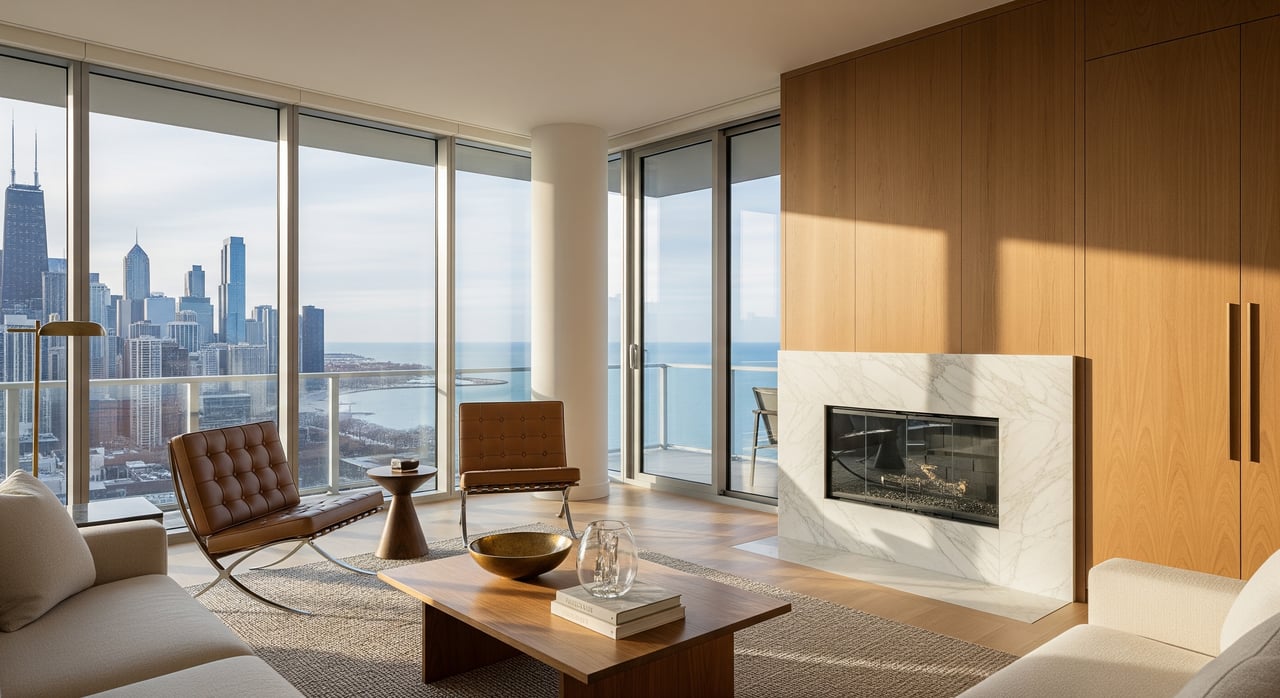
Eyeing a Streeterville condo with skyline views and concierge-level amenities, but your price point sits above typical loan limits? You are not alone. Many larger units near the Magnificent Mile require jumbo financing, and the rules for condos can feel more complex than for single-family homes. In this guide, you will learn how jumbo loans work for Streeterville condos, what lenders look for in high-rises, and how to secure a pre-approval that gives sellers confidence. Let’s dive in.
What counts as a jumbo in Streeterville
A jumbo loan is any first mortgage that exceeds the annual conforming loan limit set by the Federal Housing Finance Agency. When your loan amount is above that line, it is considered non-conforming and follows lender or portfolio standards rather than Fannie Mae or Freddie Mac rules.
In Cook County, most buyers follow the baseline conforming limit rather than a special high-cost adjustment. Because many Streeterville condos trade above that threshold, even a well-qualified buyer often needs a jumbo to close. The practical takeaway: larger two- and three-bedroom high-rise condos, full-floor residences, and penthouses commonly require jumbo financing.
What lenders expect for condo jumbos
Jumbo underwriting varies by lender, but there are consistent themes you can plan for.
Down payment and LTV
- Primary residences often allow up to 80% loan-to-value (20% down) on standard jumbo programs.
- Some programs offer up to 90% LTV for smaller jumbo amounts if you have excellent credit and strong reserves, often with a higher rate.
- For very large loans, some lenders prefer 25 to 30 percent down.
- Second homes and investment condos usually require larger down payments than primary residences.
Credit score and DTI
- Top-tier jumbo pricing typically expects mid-700s credit scores or higher. Some lenders will consider low-700s with compensating factors.
- Debt-to-income ratios are often capped at 43 percent, and sometimes lower for very large loans.
Cash reserves
- Plan for 6 to 12 months of principal, interest, taxes, and insurance in liquid reserves for many jumbo approvals.
- Very high loan amounts or buildings with extra risk may require 12 to 24 months.
- Lenders weigh liquid assets differently from retirement accounts, so how your funds are held matters.
Documentation and verification
- Expect a deeper document dive than conforming loans. You will likely submit recent statements for all accounts, with clear sourcing and seasoning for down payment funds.
- Lenders verify you still meet reserve requirements after closing, not just at application.
Rates and pricing
- Jumbo rates are sensitive to loan size, LTV, credit score, and loan type. Larger loans and higher LTVs usually price higher.
- Reducing your LTV can materially improve your rate and ease lender concerns.
Why condo project approval matters
For high-rises, the building itself is underwritten along with you. Condo project approval is often the biggest variable in a Streeterville jumbo.
What underwriters review
- Owner-occupancy ratio. Many lenders look for at least half of units to be owner-occupied, though exceptions exist with compensating factors.
- Single-entity ownership. A single owner holding too many units is a red flag.
- Commercial space. High proportions of retail or office space can trigger stricter guidelines.
- HOA finances and reserves. Lenders want well-documented budgets, steady reserve funding, and clarity on any special assessments.
- Insurance coverage. Adequate master insurance, liability, and fidelity coverage are required.
- Litigation. Active litigation related to the association can delay or block financing.
- Project completion and control. For newer buildings, lenders check completion status and whether a developer still controls the association.
Chicago and Illinois specifics
- Older towers may face large capital projects like façade work, elevators, or mechanicals. Special assessments tied to these projects must be disclosed and reviewed.
- Cook County property taxes affect your monthly payment and your DTI, so lenders factor them closely.
- Illinois condominium law sets governance and disclosure standards for association documents. Lenders expect these materials to be complete and up to date.
If the building is not approved
- Some lenders offer portfolio jumbo programs that can finance units in buildings that do not meet agency-style criteria. These often require more down payment, higher reserves, or a higher rate.
- You may still move forward by meeting stricter borrower conditions while the lender performs its own project review.
Rate and program trade-offs
Not all jumbo loans are the same. The right fit depends on your profile and the building.
Program types
- Agency-style jumbos. These mimic conforming rules and can offer competitive rates, but they require stronger borrower metrics and a clean project review.
- Portfolio jumbos. Banks keep these loans on their books. They can be more flexible on building issues or very large balances but often price higher and require more reserves.
- Relationship or private banking. High-net-worth clients sometimes receive custom pricing in exchange for assets under management or deposits.
How LTV affects rate
- Dropping from 80 percent LTV to 70 or 75 percent can open better pricing tiers and reduce reserve requirements.
- If your target building has a project concern, a larger down payment can be the difference between approval and denial.
Loan size tiers to watch
- Many lenders use internal pricing bands, such as up to 1.5 million, 3 million, or 5 million. Crossing a threshold can change pricing, documentation, or reserve needs.
Pre-approval that wins Streeterville offers
A generic pre-qual letter will not cut it for a luxury high-rise. You want a pre-approval crafted for condo scrutiny.
What a strong letter includes
- The specific program type, including whether it is a portfolio or agency-style jumbo.
- The maximum approved loan amount and proposed LTV.
- A clear list of remaining conditions, including appraisal, title, and condo project approval.
- Proof of funds for down payment and reserves.
- If available, a rate quote or lock window.
- A note on the condo project status. If the lender has reviewed the building or approved it previously, having that stated in writing helps your offer.
Timing and speed in high-rises
- Start early. Condo project reviews can add days or weeks if you wait until contract.
- Coordinate documents. Line up the association’s budget, reserve study, insurance, meeting minutes, owner-occupancy breakdown, and any litigation disclosures.
- Choose experienced lenders. Teams familiar with Chicago high-rises anticipate common issues and move faster when questions arise.
How HL2R supports you
- Vertical integration. HL2R pairs boutique representation with an in-house loan originator for faster, more reliable pre-approvals.
- Local expertise. Our team works daily with Near North and Streeterville associations and knows how to source the right building documents quickly.
- Offer strength. We help your lender tailor a precise pre-approval and coordinate with listing agents so sellers understand your financing path.
Streeterville jumbo buyer checklist
- Confirm you are above conforming limits so you can plan for jumbo terms early.
- Target an LTV that improves pricing and reduces friction. If possible, model scenarios at 80 percent and 70 to 75 percent.
- Pull updated credit and review your DTI. Clean up small balances and document income clearly.
- Build reserves. Aim for at least 6 to 12 months of housing payments in liquid or near-liquid assets.
- Pre-collect condo documents. Ask for budget, reserves, insurance, meeting minutes, owner occupancy, and any special assessment or litigation details.
- Choose a lender with Chicago high-rise experience and request a condo-aware pre-approval letter.
- If a building may not pass agency review, compare portfolio jumbo options early.
- Coordinate timelines with your agent, lender, and the association to keep your offer competitive and your closing on track.
Putting it all together
Buying a luxury Streeterville condo often means stepping into jumbo territory. Success comes from matching your profile to the right program, confirming the building’s strengths, and presenting a pre-approval that assures sellers you can close. With the right plan, jumbo does not have to feel complicated. It can be a strategic edge that helps you secure the home you want at the price and terms that fit your goals.
If you want a clear jumbo strategy, a condo-savvy pre-approval, and a team that moves quickly with Streeterville associations, we are here to help. Reach out to the HL2R Group to start a focused plan for your purchase.
FAQs
What is a jumbo loan for Chicago condos?
- A jumbo is any first mortgage above the FHFA’s conforming loan limit, which pushes the loan into lender or portfolio standards rather than agency rules.
How much down do I need for a Streeterville jumbo?
- Many primary-residence jumbos allow up to 80 percent LTV, with some strong-borrower options at higher LTVs; larger loan amounts often require 25 to 30 percent down.
What reserves do lenders require on condo jumbos?
- Expect 6 to 12 months of PITI for many approvals, with 12 to 24 months for very large loans or buildings with added risk factors.
What if the Streeterville building is not agency-approved?
- You may use a portfolio jumbo program that underwrites the property directly, though you should expect stricter requirements and potentially higher pricing.
How can I make my pre-approval stand out in Streeterville?
- Use a lender experienced with Chicago high-rises, include program type, LTV, proof of funds, remaining conditions, and, if possible, the building’s project review status.