
April 23, 2026
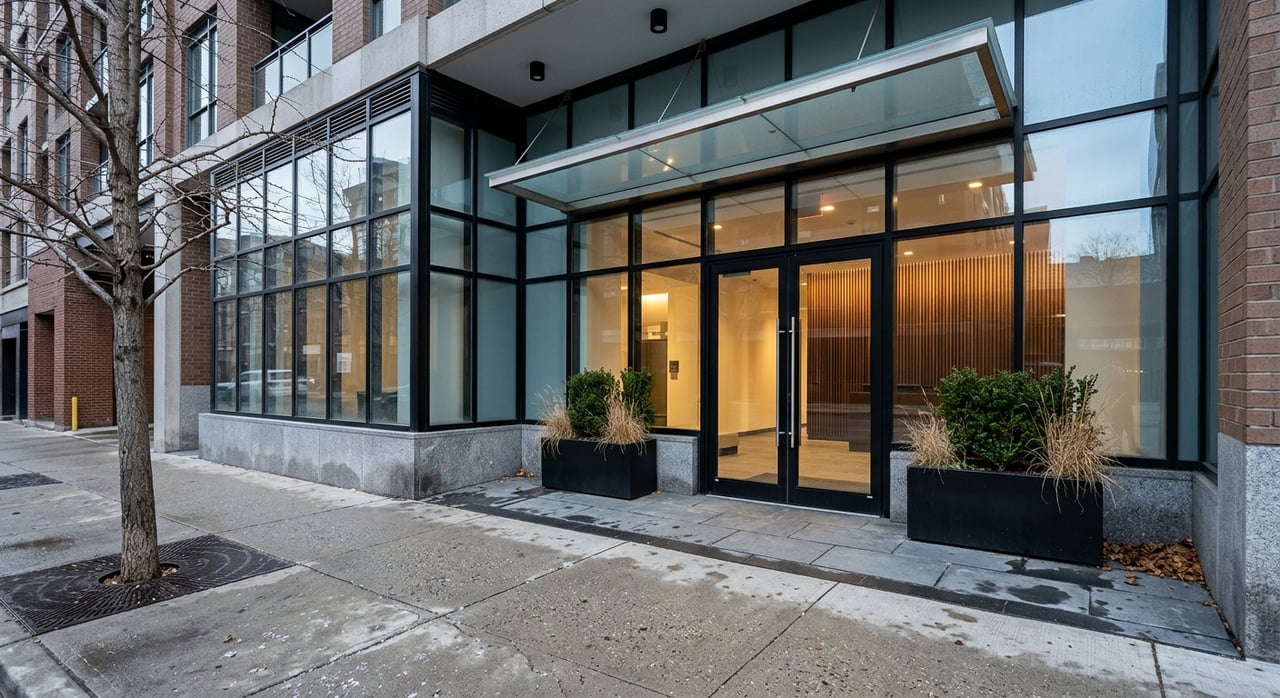
Trying to choose between South Loop and Lakeshore East for your first condo can feel like a tug-of-war between budget, amenities, and daily convenience. If you are buying for the first time, you want a neighborhood that fits your finances now and your lifestyle after closing. The good news is that both areas offer strong condo options, but they appeal to different priorities. Let’s break down what matters most so you can compare them with confidence.
For many first-time buyers, the biggest difference comes down to cost versus package. South Loop is typically the more affordable starting point, while Lakeshore East often comes with a higher price tag and more full-service building features.
According to Neighborhoods.com market data for South Loop, South Loop averages about $379 per square foot with a median sale price around $390,000. By comparison, Lakeshore East comes in much higher at about $687 per square foot with a median sale price of $650,000. That price gap alone can shape what size unit, building type, or monthly payment feels realistic for you.
If your top goal is getting into the downtown Chicago condo market at a lower entry point, South Loop usually gives you more room to work with. The research shows South Loop listings commonly landing around $335 to $399 per square foot, which can make it easier to find a condo that fits a first-time buyer budget.
Lakeshore East tends to ask more upfront, especially in newer or more polished high-rise buildings. Current examples range from about $329 to $603 per square foot depending on the tower and finish level, but the neighborhood-wide averages still point to a more expensive market overall.
That does not automatically make one area better than the other. It means your decision should start with how much flexibility you want in your purchase price, down payment, and monthly housing costs.
Monthly HOA fees matter just as much as sticker price, especially when you are buying your first home. In both neighborhoods, association fees can vary widely by building, but South Loop generally offers more approachable ranges.
Neighborhoods.com data shows South Loop HOA fees ranging from $108 to $5,977 per month, while Lakeshore East ranges from $447 to $9,747 per month. That broad spread tells you something important: building choice matters as much as neighborhood choice.
South Loop buildings can offer strong amenities without always pushing fees into the highest tier. For example, one current South Loop listing at 100 E 14th St includes an indoor pool, fitness center, penthouse club room, and 24-hour door staff with an HOA of $892 per month.
Another listing at 1255 S State St includes a fitness center and 24-hour door staff with an HOA of $1,015 per month. In practical terms, South Loop gives you a broader mix of buildings, from simpler setups to amenity-rich towers.
Lakeshore East often leans more heavily into the full-service high-rise experience. A listing at 195 N Harbor Dr includes a rooftop pool, tennis courts, gym, spa, and 24/7 staff with a $715 monthly HOA, while a unit at Aqua Tower carries a much higher $2,521 monthly HOA tied to a large amenity package.
That package can include indoor and outdoor pools, a gym, movie theater, and 24-hour door staff. If you want a building that feels more like a residential resort, Lakeshore East may be worth the premium. If you want more choice in fee levels and building styles, South Loop may feel more practical.
Your condo is not just the unit itself. It is also how easily you move through the city once you live there. On transit, South Loop currently has the more direct advantage.
The CTA Roosevelt station page shows Roosevelt serving the Red, Orange, and Green lines. The area also connects to buses, the Metra Roosevelt Road Station nearby, and the Museum Campus/11th Street stop on the Metra Electric line.
For a first-time buyer, that layered access can make South Loop feel easier for commuting and everyday errands. You have multiple train lines and rail connections close by, which can be a major quality-of-life factor if you depend on transit regularly.
Lakeshore East still offers strong connectivity, but the experience is a bit different. The neighborhood is more pedestrian-oriented and closely tied to downtown walkways and station access, including Washington/Wabash and Millennium Station.
Current conditions matter here. The CTA closed State/Lake in January 2026 for reconstruction, with reopening scheduled for 2029, so riders nearby are relying more on Washington/Wabash, Clark/Lake, and Millennium Station for now. If you want the most straightforward transit setup today, South Loop has the edge.
If being near large public green space matters to you, South Loop stands out in a big way. It sits close to some of Chicago’s most significant lakefront park space, which can shape how the neighborhood feels day to day.
The Chicago Park District’s Grant Park information notes that Grant Park spans 313 acres, and Burnham Park totals 653.63 acres. With the Museum Campus in the same broader lakefront park system, South Loop offers immediate access to major outdoor space for walking, running, and time by the lake.
Lakeshore East takes a different approach. It is a smaller, master-planned environment with 28 acres overall and about 40 percent open space, including a 6-acre botanical park. Rather than feeling expansive in the same way as South Loop’s lakefront park access, it tends to feel more curated and centered around a defined residential enclave.
One of the biggest lifestyle differences between these neighborhoods is the kind of condo inventory you are likely to tour. South Loop has a broader mix of building ages and styles, which can give you more options depending on your taste and budget.
Research shows South Loop buildings ranging from 1883 to 2023, with a median construction year of 2003. In real life, that often means you may see older loft-style spaces, early-2000s towers, and newer construction all within the same home search.
Lakeshore East inventory tends to feel newer and more consistent. While reported building ages range from 1963 to 2021, the area is widely experienced as a more modern, uniform, high-rise environment shaped by a master-planned layout that began in the early 2000s.
If you are a first-time buyer who wants more price flexibility, stronger direct transit access, and easy reach to major public parks, South Loop may be the better fit. It can also be a smart choice if you want to compare a wider mix of buildings, layouts, and HOA structures before making a decision.
If you are comfortable paying more for a newer-feeling, full-service tower environment with a polished amenity package and a park-centered planned setting, Lakeshore East may match your goals better. It can appeal to buyers who value a more uniform residential experience and are willing to trade a higher purchase price for that setup.
Neither option is universally better. The right choice depends on whether your first priority is affordability, convenience, amenities, or building style.
Before you choose a condo in either neighborhood, make sure you compare the full cost of ownership and not just the list price. A lower-priced unit with higher HOA fees may affect your monthly payment more than you expect.
Here are a few smart questions to bring into your condo search:
When you answer those questions honestly, the better neighborhood usually becomes much clearer.
Buying your first condo in Chicago is a big milestone, and the best decision usually comes from matching the numbers to your real day-to-day life. If you want help comparing buildings, HOA structures, commute options, and financing paths in South Loop or Lakeshore East, the team at HL2R Group can guide you through the process with a concierge approach built for confident decisions.
Stay up to date on the latest real estate trends.
September 17, 2026
September 10, 2026
September 3, 2026
August 27, 2026
August 20, 2026
August 13, 2026
August 6, 2026
August 6, 2026
July 23, 2026
With combined experience in the industry spanning over two decades, these agents have joined forces to handle all of your real estate needs, specializing in neighborhoods from Chicago’s South Loop all the way into the North Shore suburbs.