
April 16, 2026
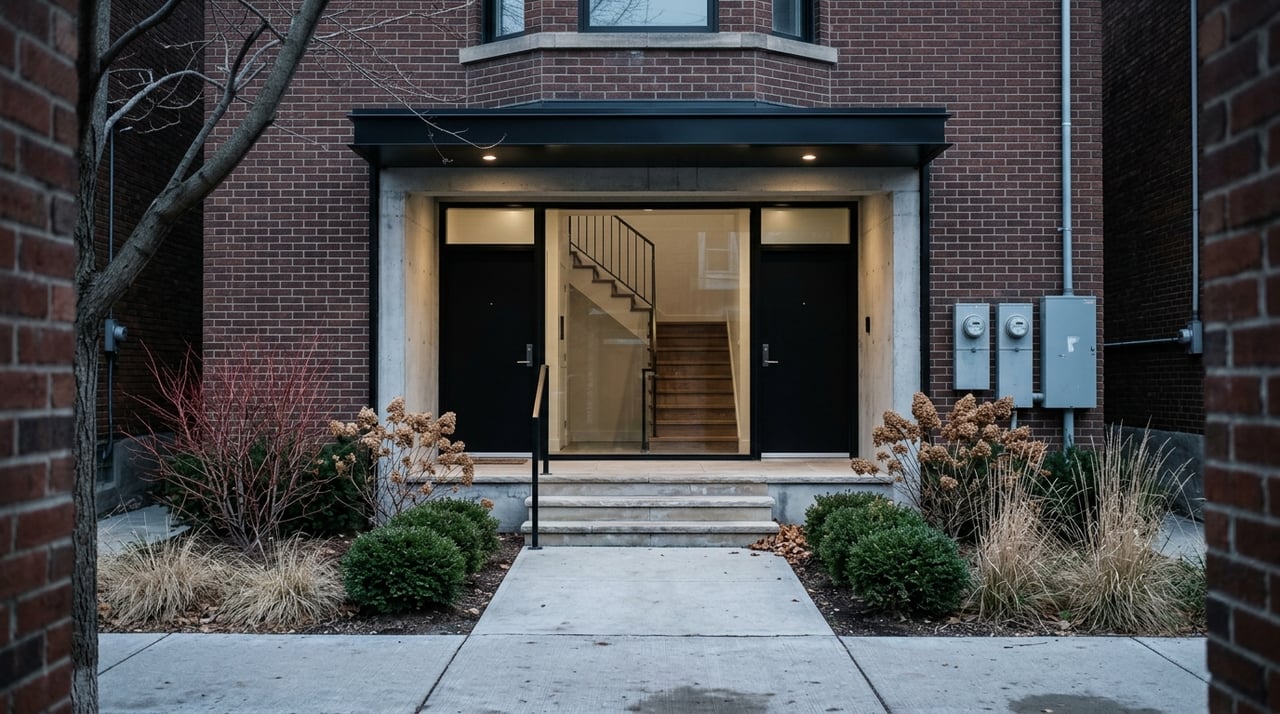
If you want to lower your housing cost in Evanston without leaving the North Shore market, a duplex house hack may be worth a serious look. Buying a two-unit property, living in one unit, and renting the other can help offset your monthly payment, but only if the numbers and local rules work in your favor. In this guide, you’ll learn how duplex house hacking works in Evanston, what financing options may fit, and which local compliance details matter before you buy. Let’s dive in.
Evanston has a few traits that make duplex house hacking more realistic than in many nearby markets. It combines relatively strong home values, solid rental demand, and transit access that can support long-term renter interest. That does not guarantee a profitable deal, but it can create a workable setup for an owner-occupant who wants help covering monthly costs.
According to Zillow’s Evanston home value data, the average home value was $470,774 as of March 31, 2026. Redfin reported a February 2026 median sale price of $432,500 in the same market, which shows why buyers need to look closely at individual property type, condition, and location within Evanston.
Rental numbers are a big part of the house-hack equation. Based on Zillow’s Evanston rent trends, average rent across all unit sizes was $2,300 in April 2026, and the average for a two-bedroom was $2,195. A practical planning range for a duplex rental unit in Evanston is roughly $2,200 to $2,500 per month, since different data sources use different methods.
Evanston also offers transit and amenity access that can support renter demand. The city notes in its planning materials that the CTA Purple Line runs through Evanston with weekday service and connections to bus and rail options, and the city also highlights its lakefront park system.
House hacking a duplex usually means you buy a two-unit property as your primary residence, move into one unit, and rent out the other. Instead of treating the property as a pure investment from day one, you use owner-occupant financing and offset part of your housing payment with rent.
This strategy can be especially appealing if you want to buy in Evanston but need help making the monthly cost more manageable. Rather than waiting until you can comfortably afford a duplex payment on your own, you may be able to use rental income from the second unit as part of your broader plan.
The key is to think of house hacking as a cost-reduction strategy, not a guaranteed profit machine. Your results depend on your loan terms, taxes, insurance, maintenance, vacancy risk, and whether the rent you can charge is enough to create meaningful monthly relief.
Financing is often the first big decision in a duplex house hack. In most cases, the best path depends on your eligibility, your available cash, and how you want to balance upfront cost against long-term monthly expense.
For many first-time buyers, FHA financing is the most straightforward low-down-payment option. HUD states that FHA-insured financing requires at least 3.5% down, which can make a duplex purchase more accessible if saving a larger down payment would delay your plans.
This option can be useful if your main goal is getting into the market with less cash upfront. In Evanston, where duplex pricing can still be substantial, that lower entry point may make the difference between buying now and waiting.
Conventional financing is also very much on the table for owner-occupied multi-unit purchases. Under Freddie Mac’s standard conforming guidelines, a 2-unit primary residence can go up to 95% loan-to-value, which generally means about 5% down for a duplex under standard rules.
Freddie Mac’s Home Possible program can go as low as 3% down for eligible borrowers and can be used on 2-4 unit primary residences when the loan meets program requirements. If you have strong credit or want to compare monthly costs against FHA, conventional financing may deserve a close look.
If you are an eligible veteran or service member, VA financing may be the most cash-efficient path. The VA purchase loan program allows you to buy a property with up to 4 units as long as you live in one of them, and VA-backed purchase loans often require no down payment and no monthly mortgage insurance.
For eligible buyers, this can be an especially strong house-hack option. Lower cash needed at closing can free up reserves for repairs, maintenance, or future upgrades.
One reason duplex house hacking appeals to buyers is that rental income from the non-owner unit may help with underwriting. That said, lenders usually want documentation, not estimates pulled from memory.
According to Freddie Mac’s rental income guidance, for 2-4 unit properties, lenders should enter gross monthly rental income for each non-owner-occupied unit as shown on signed leases. If the unit is vacant, your lender may instead require market-rent documentation as part of the file.
That means you should not assume every dollar of projected rent will automatically count the way you expect. Before writing offers, it helps to talk through likely income treatment with your lender so you understand what numbers are actually usable.
Loan limits can matter if you are comparing conforming financing with higher-balance options. For 2026, the FHFA conforming loan limit list shows Cook County limits of $832,750 for a 1-unit property and $1,066,250 for a 2-unit property.
For many Evanston duplex purchases, that means standard conforming financing may still work. Still, a higher-end or fully renovated duplex could approach or exceed those thresholds, so this is something to verify early when you narrow your target price range.
A duplex house hack works on paper only when you budget for the full ownership picture. Mortgage principal and interest are only part of the story.
You will also want to account for:
In Evanston, that last category matters more than some first-time house hackers expect. Local compliance costs and timing can affect your actual monthly and annual ownership expenses.
If you plan to rent one unit of your duplex, you are stepping into Evanston’s rental-property rules. This is where many buyers need to slow down and look past the purchase price.
The City of Evanston says residential rental property must be registered annually. The rule applies to long-term rentals in single-unit homes, condos, multi-unit buildings, and accessory dwelling units.
The current city fee schedule includes a $200 new-registration application fee, $12 per unit for annual renewal, and $50 per unit for routine inspections. The initial inspection for new registration is included in the registration fee.
This point is especially important for duplex buyers. If you live in one unit, only your occupied unit is exempt from registration. The other unit still needs to be registered if it is rented.
That distinction can catch first-time owner-occupants off guard. If you assume the owner-occupant exemption covers the whole duplex, you could create a compliance issue right after closing.
Evanston also ties inspection frequency to the property’s compliance history. The city uses a 5-year cycle for units with no violations on the last routine inspection, a 3-year cycle for units with up to 7 violations, and a 1-year cycle for units with more than 7 violations or an insect or vermin infestation.
This matters because building condition affects more than maintenance costs. It can also influence how often your rental unit is inspected and how much attention the property may need over time.
The city notes that failure to register a rental property can lead to fines. For a house hacker, that means compliance is not optional background paperwork. It is part of the real operating cost of the property.
If you are considering creative rental setups, Evanston has an occupancy rule you need to understand. The city states that no dwelling unit may be occupied by more than three unrelated persons unless the landlord has a valid lodging establishment license.
This rule applies broadly to a single-family home, duplex, apartment, or other dwelling unit. If your plan involves renting the non-owner unit to several unrelated roommates, make sure you understand how this local rule affects what is allowed.
Being a successful duplex owner-occupant is not just about collecting rent. You also need clean paperwork and a consistent process.
The Illinois Department of Human Rights says landlords must attach the Summary of Rights for Safer Homes as the first page of any new or renewed written residential lease and obtain tenant acknowledgments. If you are new to landlording, this is one of the easiest details to miss.
Security deposits require care too. The Illinois Attorney General’s landlord-tenant guidance says landlords may require a security deposit and there is no legal maximum, but interest is owed only when the deposit is held at least six months and the building has at least 25 units.
The same guidance also matters at move-out. If you plan to deduct repair costs from a tenant’s deposit, Illinois Legal Aid notes in the Attorney General summary that landlords must provide a written damage statement within 30 days after move-out.
Before you make an offer, it helps to use a simple screening process. You do not need a perfect spreadsheet on day one, but you do need a realistic framework.
Ask yourself:
That last question matters more than most buyers expect. Even a solid duplex can feel like a poor fit if you are not prepared for the responsibilities that come with renting out part of your home.
In Evanston, a duplex house hack can be a smart way to reduce your monthly housing costs while buying into a desirable, transit-connected market. The strategy tends to work best when you pair owner-occupant financing with realistic rent expectations and a clear plan for registration, inspections, leases, and ongoing maintenance.
In other words, success usually comes down to three things: buying a property that fits owner-occupant financing rules, keeping the rental unit in compliance with Evanston requirements, and setting rent at a level that meaningfully offsets your costs. If you want help evaluating duplex opportunities, financing scenarios, or the next steps in Evanston, connect with HL2R Group for a concierge-level strategy built around your goals.
Stay up to date on the latest real estate trends.

August 20, 2026
August 13, 2026

August 6, 2026

August 6, 2026

July 23, 2026

July 16, 2026

July 9, 2026

July 2, 2026

June 25, 2026
With combined experience in the industry spanning over two decades, these agents have joined forces to handle all of your real estate needs, specializing in neighborhoods from Chicago’s South Loop all the way into the North Shore suburbs.