
July 23, 2026
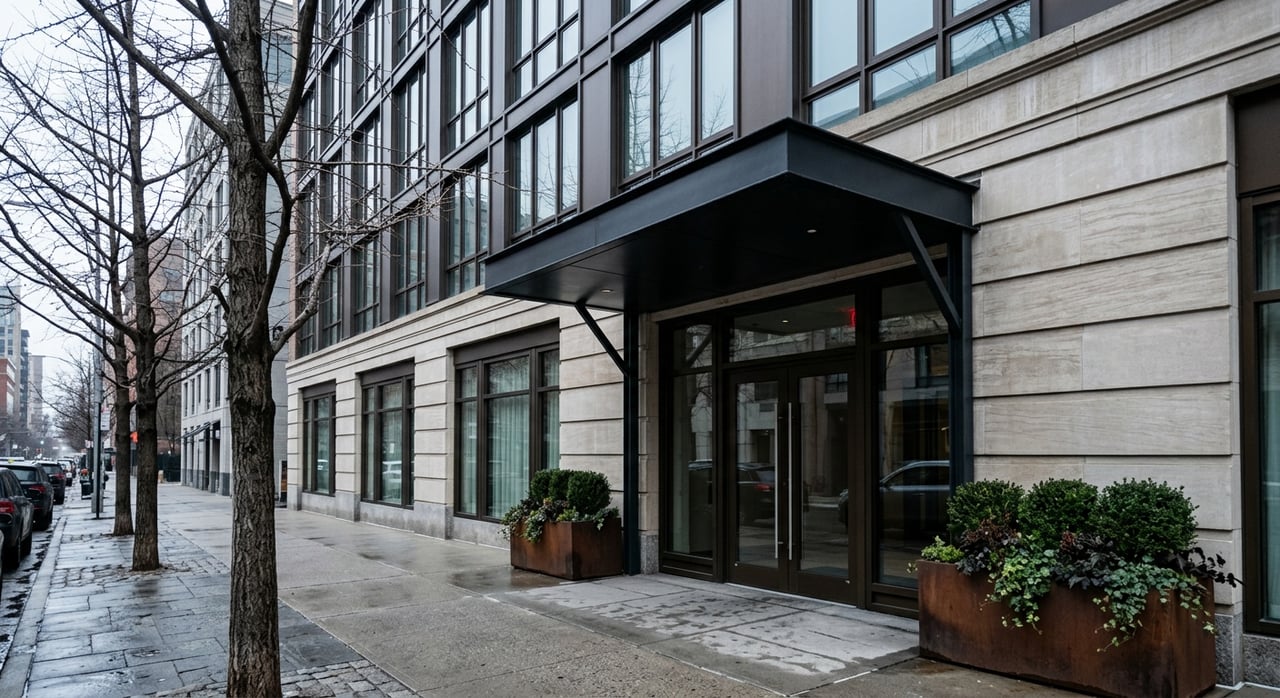
Looking at Lake View for your first investment property can feel exciting and a little intimidating. You want a neighborhood with steady renter demand, but you also need an entry point that makes sense for your budget and risk tolerance. The good news is that Lake View gives you a clear story if you know what to watch for. Here’s how to decide whether this popular Chicago neighborhood fits your first investment goals.
Lake View stands out because it combines strong renter demand with an urban lifestyle many tenants actively seek. In CMAP’s 2020 to 2024 snapshot, the neighborhood had 102,827 residents, 58,374 households, and a median household income of $105,499, which is higher than Chicago overall.
It is also a renter-heavy market. About 62.5% of occupied housing is renter-occupied, which matters if you are buying your first income property and want a neighborhood where renting is already the norm.
For many first-time investors, that is a useful starting point. You are not trying to create rental demand from scratch. You are stepping into a market where a large share of households already rent.
The renter profile in Lake View is one of the biggest reasons investors look here first. CMAP data shows 46.4% of residents are ages 20 to 34, 51.2% of households are one-person households, and 70.9% are non-family households.
That usually points to demand for smaller and more efficient homes. Studios, one-bedroom condos, and compact two-bedroom units often line up better with the area’s household size than large detached homes.
This does not mean every small unit is automatically a good investment. It does mean your property type should match how people in the neighborhood actually live.
If you are picturing a detached house with a yard, Lake View may not be the easiest place to start. The neighborhood’s housing stock is heavily weighted toward multifamily buildings.
According to CMAP, 50.2% of housing units are in buildings with 20 or more units. Another 14.5% are in 3- to 4-unit buildings, and 14.4% are in 5- to 9-unit buildings. Only 6.7% of units are detached single-family homes.
That is why condos and small multifamily properties are often the more realistic first investments here. The Cook County Assessor’s 2024 estimates put median sales prices around $301,000 for condos and $868,000 for small apartment buildings, while single-family homes were estimated at $1.063 million.
For many buyers, that pricing makes the path pretty clear. A condo may offer a lower barrier to entry, while a small multifamily may appeal if you want multiple income streams and can handle a larger upfront cost.
A first investment works better when you understand the lifestyle people are paying for. In Lake View, that lifestyle is tied closely to convenience, transit access, entertainment, and the lakefront.
Choose Chicago highlights areas like East Lakeview, Southport Corridor, Northalsted, and Wrigleyville, along with shopping, restaurants, music venues, and lakefront access. The Chicago Park District notes that the Lakefront Trail stretches along the city shoreline, with separate trails for biking and walking.
Transit also plays a major role. CTA stations in and around Lake View include Belmont, which serves the Red, Brown, and Purple lines, Southport on the Brown Line, and Addison on the Red Line.
The neighborhood is also relatively car-light. CMAP reports that 39.5% of households have no vehicle, and 29.3% commute by transit. For you as an investor, that suggests many renters may place a premium on walkability and train access over parking or extra outdoor space.
If you want your first investment in a neighborhood with an active housing market, Lake View checks that box. CMAP’s 2022 data shows 2,567 residential sales, a median residential sales price of $430,000, and 8.5 sales per 100 residential properties.
It is also notable that investor buyers accounted for 8.1% of sales, below Chicago’s 15.8%. That can suggest a market that is active without being especially crowded by investor competition.
Lake View may be a strong fit for you if you want:
For a first-time investor, those traits can make the neighborhood easier to understand. The renter story is visible, and the housing stock generally supports that story.
Lake View is not usually the right first investment if your top priority is the lowest possible entry price. It is a higher-cost urban neighborhood, and your carrying costs can add up fast.
CMAP reports median monthly owner costs of $3,288 for households with a mortgage and $1,343 for households without one. Those figures include property taxes, insurance, utilities, mortgage payments, and HOA costs or fees where applicable.
That last point matters a lot with condos. A lower purchase price can still lead to a tighter monthly budget if HOA dues, taxes, insurance, and maintenance are higher than expected.
You also need to underwrite rent conservatively. CMAP reports a median gross rent of $1,889, and 18.6% of renter households pay $2,500 or more, but affordability pressure is still real. In Lake View, 21.5% of renter households are cost burdened and 17.4% are severely cost burdened.
In simple terms, this is not a market where it makes sense to rely on overly aggressive rent growth assumptions. A careful deal can work well. A thin-margin deal can get stressful quickly.
Many Lake View properties have charm, but age matters when you are buying your first investment. The median year built is 1962, and 34.7% of units were built before 1940. Another 25.8% were built between 1940 and 1969.
Older buildings can still be strong investments, but they usually require more careful inspection and reserve planning. If you are buying a condo, you will want to understand not just your own unit, but also the condition of the building and the financial health of the association.
If you are considering a small multifamily property, building age can affect repair timelines, maintenance costs, and how much cash you should keep in reserve. For a first-time investor, this is one of the biggest places where patience during due diligence can protect you later.
Lake View is in Chicago, so city-specific rental rules are part of the investment picture. Chicago’s Residential Landlord and Tenant Ordinance applies to every rental agreement for a dwelling unit located within the city.
Illinois law also prohibits local rent control. That does not remove your compliance obligations, though. It simply means your planning should focus on city landlord rules, lease requirements, and operating expectations specific to Chicago.
If you plan to live in the property, the Homeowner Exemption may matter. The Cook County Assessor says it applies to a principal residence and saves the average Cook County property owner about $950 per year, which is more relevant for owner-occupants or house hackers than for a pure rental property.
Lake View can be a smart first investment if you are comfortable with a higher-cost, amenity-driven urban property. It tends to make more sense for buyers looking at condos or small multifamily buildings than for those hoping to buy a detached single-family rental.
It may be a good fit if you value strong renter demand, transit access, and a neighborhood where smaller units match the household profile. It may be a tougher fit if you need a bargain entry price, want a low-maintenance building with minimal shared costs, or need the deal to work only with very optimistic rent projections.
The key is not whether Lake View is popular. It is whether the specific property fits your budget, financing, monthly carrying costs, and long-term plan.
When you are ready to compare condos, small multifamily options, or owner-occupant investment strategies in Lake View, HL2R Group can help you evaluate the numbers, the building, and the neighborhood with a clear local lens.
Stay up to date on the latest real estate trends.

September 3, 2026

August 27, 2026

August 20, 2026

August 13, 2026

August 6, 2026

August 6, 2026
July 23, 2026

July 16, 2026
July 9, 2026
With combined experience in the industry spanning over two decades, these agents have joined forces to handle all of your real estate needs, specializing in neighborhoods from Chicago’s South Loop all the way into the North Shore suburbs.